Electric Kilns and Firing - Online Course (Test)
Rated 4.63 out of 5 based on 8 customer ratings
(8 customer reviews)
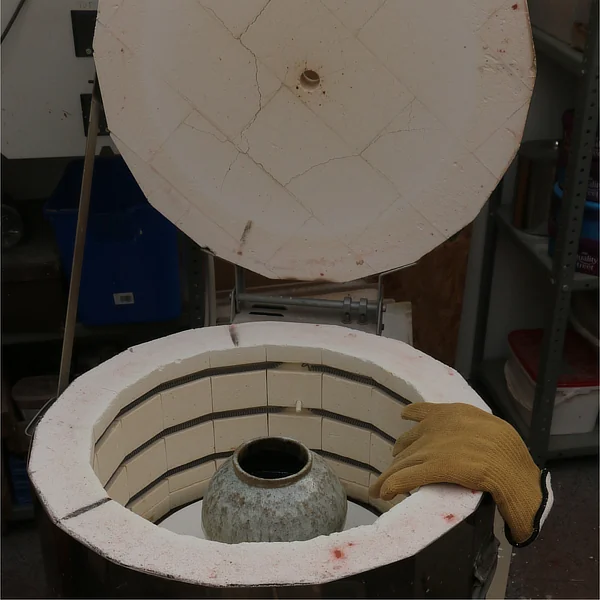
Understand your kiln. Fix firing problems. Get better and more consistent results.
Remember opening your kiln to find your favourite piece cracked? Or wondering why the studio’s glaze firings always turn out perfect while yours are unpredictable?
Every potter faces these moments of kiln confusion. Whether you’re just getting your first kiln, or want to improve your firing results, this 8-module course transforms uncertainty into understanding.
You’ll discover why your kiln does what it does, how to read what it’s telling you, and how to fix problems before they ruin another firing. Clear explanations of what, why and how things happen, and what to do about it, from a potter who’s been where you are. You’ll also learn how to use your kiln safely, how to install it and how to maintain it.
This is a clear, practical course that teaches you everything you need to fire an electric kiln safely, confidently, and with predictable results.
Join the hundreds of potters who’ve gone from praying to the kiln gods to becoming a kiln god(dess) by doing this course.
DFS DGFED E4R5T
DFSVDFDFSVAVDFSVDFDSVFAFDVB ERWERW TGW45GR W4 4W5R4W 5T 4W5E6TG45WRETG 45RETGH 5E4RT6H 45E6TGH 65H4TG 456GHT 45E6GTWH 564
fdgg sdfrggdafegssgfd
ds fgsfdsg sdeg dfs gdf dsgfgdfsgsdfgsdf gdf dfgd gsfdsfgdsfgdfgs
£145.00
Other currencies (approx.)
€168
US$194
A$279
Share with your friends
Facebook
Threads
Pinterest
Reddit
WhatsApp
Email
Course Details
About the course
This online electric kiln firing course teaches you how electric kilns work, how to fire them correctly, and how to carry out maintenance and troubleshooting. Understand how electric kilns work, how to get the best out of firing them, and how to look after them. This course provides you with all you need to know about owning and operating an electric kiln, starting from the basics. The electric kilns and firing course is one of my most popular courses, and has had hundreds of students since it was launched in 2022.
About your instructor
I have been making ceramics since 2008, starting with evening classes and then setting up my own studio a couple of years later. Over the years I have owned, fired, maintained, repaired and rebuilt a variety of electric kilns. With my background in science and engineering, I am drawn to the technical aspects of the craft, but enjoy explaining the technicalities in plain language to those with less technical knowledge. I regularly post on these lines on social media, and have been teaching since 2020, mostly online. The electric kilns and firing course is one of my most popular, and has had hundreds of students since it was launched in 2022.
What you will achieve
By the end of the course you will have learned the following:
Kiln knowledge
- Identify and understand kiln components and the digital controller
- Understand how kilns heat up, and how they behave
- Grasp the principles of temperature and heat work, and how we measure heat with thermocouples and cones
- Understand how clays and glazes are transformed during firing
- Learn the differences between bisque and glaze firing behaviour
Firing Operations
- Load your kiln efficiently, and choose the most suitable kiln furniture
- Develop reliable bisque and glaze firing schedules for your work
- Program and use your kiln controller
- Evaluate witness cones and firing logs, and interpret your firing results
- Identify and troubleshoot firing faults in your clays and glazes
Kiln Selection, Installation, Maintenance and Safety
- Know what to look for when buying a new or second‑hand kiln
- Know how to install your kiln safely
- Understand safety requirements (heat, electricity, fumes and ventilation)
- Maintain your kiln, carry out routine checks, fault finding and repairs
Why do this course?
Why do this electric kiln firing course, as opposed to just reading the kiln manual, or watching YouTube videos? I’d suggest that there are four key benefits:
- I cover both the practicalities and the underlying theory. You’ll learn what you should do and why
- Whilst the videos cover the key aspects of firing and maintaining a kiln, the additional material goes much wider, so you can explore the aspects that are of most interest/relevance to you and your practice
- Kiln manuals just tell you where things are on your kiln and how to change settings. They don’t tell you what those settings should be, and why
- I offer personal support for any questions you may have, not just about the course content but about anything ceramics related
What do you get?
- Over 12 hours of video talks, divided into 8 modules, with subtitles in your language
- PDFs of all presentations
- Additional course material to help you go into topics in more depth, or broaden out to topics not included in the talks
- Personal support through emailing in questions or joining the monthly Ask me Anything online session
- Access to my tech website, which covers all of my course topics and more
- Course attendance certificate
- 12 weeks from your enrolment date to complete the course
How is it run?
A self-directed online study with access to your instructor:
- You can start as soon as your order has been processed
- Eight on-demand modules that you can take at your own pace
- Each module has:
- A video talk (about 90 minutes)
- A downloadable PDF of the presentation
- Optional material to go into things more deeply
- Ask questions any time by email
- Monthly “Ask Me Anything” live Q&A session (recorded if you can’t attend)
- Premium access to the Tech section of my website
- Suggested practicals you can do with your kiln
- 12 weeks of access is included, extendable at any time through Patreon for about the cost of a coffee a month
- Course attendance certificate (PDF)
Who is it for?
- Beginner to intermediate potters, with some experience of making and firing pots either in a studio or with their own kiln
- Potters who’ve just bought a kiln and want to use it correctly
- Makers who use studio kilns and want to understand the firing process
- Ceramicists with an existing kiln who want to learn how to get more out of it
- Potters who find they’re getting inconsistent firing results
- Ceramicists who need to learn how to manage a kiln in a studio
- Makers who want to understand why things happen when firing
- Anyone ready to adopt scientifically based firing practices
Accessibility
• Video lectures with subtitles (in English and translated into attendee’s languages)
• Downloadable PDFs in English for offline reading
• Web site is in English
• Email support during the course
Module outlines
- Introduction: types of electric kilns; kiln components; the kiln controller; firing schedules; heat and heatwork; from clay to ceramic
- Heat: what is heat?; material properties; kiln insulation; kiln furniture; kiln elements and wiring; kiln volume versus power; the heating process
- Measuring Heat: thermocouples; thermocouple types and accuracy; adding time; cones; cones and temperature; cone alternatives
Firing Transformations: Phase diagrams and eutectics; solid state reactions; melting and dissolving; water; thermal decomposition; organics; fumes; water; phase changes; clay transformations; glaze transformations - Kiln Furniture & Loading: shelf and pot placement; heat distribution; bisque loading; glaze loading; stilts and other supports; cranks and setters; bead racks; DIY kiln furniture; shelf protection; batt/kiln wash; opening the kiln; unloading
- Firing: the kiln controller; firing programmes; digital kiln controller programming; ramps and holds; cone firings; the effects of kiln load and insulation; monitoring and logging the firing; calibrating the kiln; firing strategies; matching clays and glazes; firing schedules for all types of firing including bisque and glaze firing schedules; reduction firing in an electric kiln
- Faults: diagnosing and fixing cracks; clay pinholes; black coring; blistering and bloating; blow-outs; warping; dunting; slumping; glaze runs; glaze bubbles and pinholes; crawling; crazing; shivering; and other unexpected glaze results
- Safety: clothing and PPE; fire; kiln surface temperatures; kiln controller safety and diagnostic features; kiln fumes; ventilation and kiln vents
Maintenance: Maintenance schedule; thermocouple calibration; cleaning and repairing the bricks; replacing the elements - Installation: Buying a kiln; installation – electrics, burns and fires; kiln ventilation; studio ventilation
Diagnostics: Step by step electric kiln troubleshooting to find out what has failed when the kiln isn’t working properly
FAQs
- Do I need to own a kiln? No. You’ll still learn valuable theory, programming, and troubleshooting to apply in a studio setting. But there are a number of suggested exercises that you will find useful if you have access to a kiln
- Will you answer questions on specific problems I’m having, even if outside of the course content? Yes, definitely. As well as helping you, answering questions makes running the courses more interesting for me, and sometimes suggestions changes to make to the course. So feel free to ask me anything.
- Which controllers/kiln brands are covered? The videos cover things generically, as there are too many kilns out there to cover them all. Specific kilns and controllers are covered through the additional material, and through the emails and AMA sessions. If your kiln or controller isn’t covered, I’ll happily track down the necessary information for you, and take you through it.
- Do you cover kiln sitters and manual controls? No, only digital controllers are covered, though most of the rest of the course is applicable to kilns with these older technologies.
- How much time is needed? As a minimum, 13 hours to watch the 8 videos, but if you want to get the most out of the course you may find that you spend double this time on it.
- Do I have lifetime access to the course? You have 12 weeks to complete the course. Then, at any stage after that, you can regain access by supporting me on Patreon for about the cost of buying me a coffee every month.
- Do you cover glaze defects? Yes – module 6 covers diagnosing and fixing clay and glaze defects, and there is also more information in the additional material. If you have a specific problem, please ask me about it.
- How technical is the course? Do I need advanced maths? This is a technical subject, but the technicalities are explained in plain language for those with minimal prior knowledge. Whilst some information is given mathematically for those who have the necessarily skills, it is also explained in a non-mathematical way for everyone else.
- Are there any other costs? No, other than the cost of firing your kiln if you do any of the exercises
- Is the course suited to those outside of the UK? Yes. The principles of kilns and firing them are universal. Whilst I mostly talk about European and North American kilns, I have some knowledge of kilns from elsewhere. For those in the USA, units are given in Imperial as well as metric units. The videos can have subtitles added for most languages, though the website and PDFs are in English.
For general questions on my courses, please refer to the general courses FAQ
Reviews
Rated 4.00 out of 5 based on 1 customer rating
(1 customer review)
| Testimonial | Client Section | |||
|---|---|---|---|---|
ds fgsfdsg sdeg dfs gdf dsgfgdfsgsdfgsdf gdf dfgd gsfdsfgdsfgdfgs | fdgg sdfrggdafegssgfd 8 March 2026 | |||
DFSVDFDFSVAVDFSVDFDSVFAFDVB ERWERW TGW45GR W4 4W5R4W 5T 4W5E6TG45WRETG 45RETGH 5E4RT6H 45E6TGH 65H4TG 456GHT 45E6GTWH 564 | DFS DGFED E4R5T 8 March 2026 | |||
£145.00
Other currencies (approx.)
€168
US$194
A$279
Share with your friends
Facebook
Threads
Pinterest
Reddit
WhatsApp
Email
-

Kilns for Schools – Online Course
Rated 4.33 out of 5£100.00 Add to basket -

Electric Kilns and Firing – Online Course
Rated 4.79 out of 5£145.00 Add to basket -

Studio Health and Safety – Online Course
Rated 4.83 out of 5£145.00 Add to basket -

Food Safe and Stable Glazes – Online Course
Rated 5.00 out of 5£130.00 Add to basket -
Product Safety for Potters – Online Course
Rated 4.78 out of 5£115.00 Add to basket